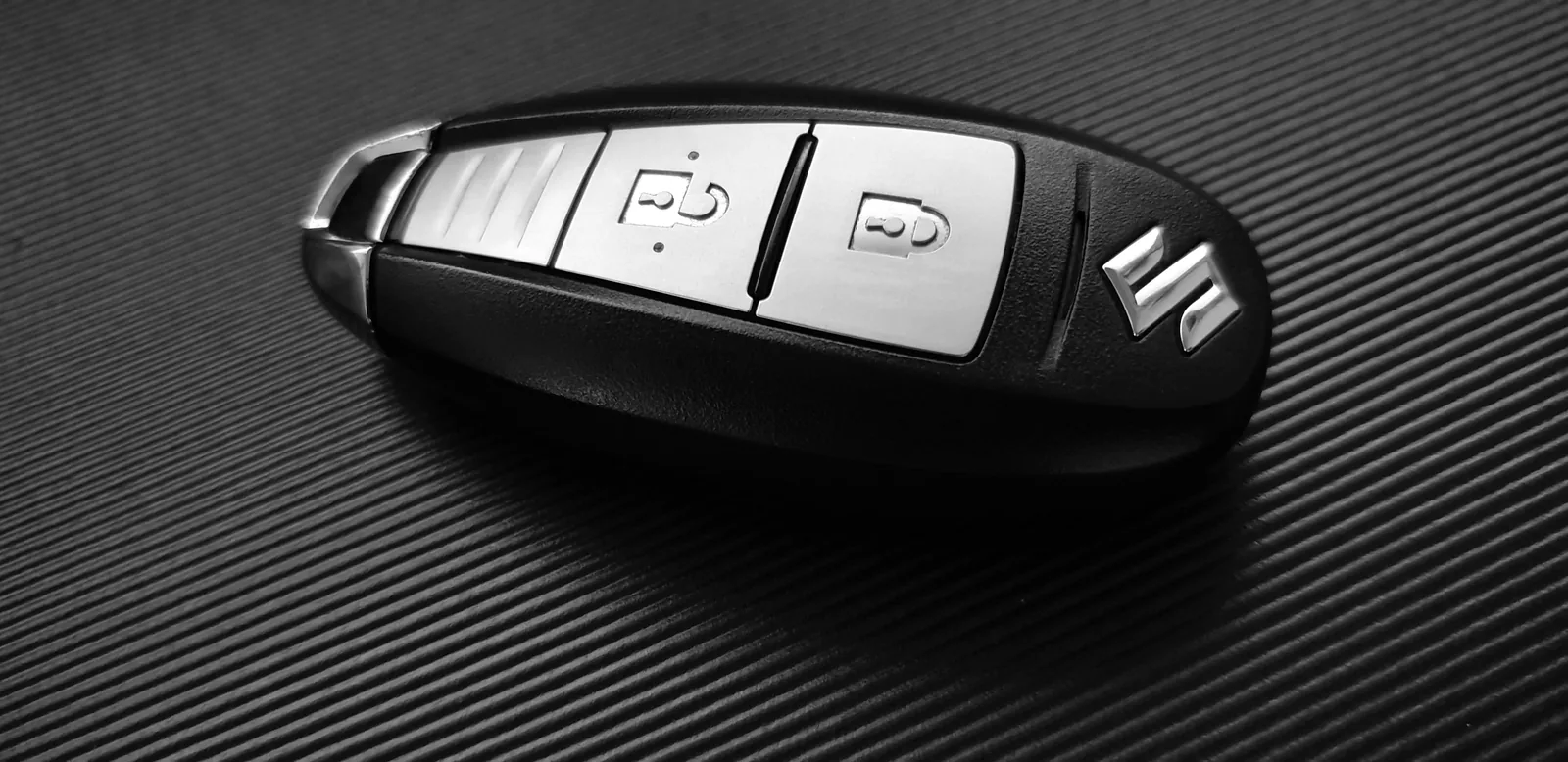
If you remember getting a car key cut for a few dollars at a hardware store, you’re not imagining the price jump since then. Here’s what actually changed.
The Old Days: A Cut of Metal
Older car keys were purely mechanical, a shaped blade that matched the pin tumblers in the lock. Any hardware store key machine could duplicate one in minutes for a few dollars.
Then Came the Transponder Chip (1990s)
Automakers began embedding a small chip in the key that communicates with the car’s immobilizer system. Without the correct chip, the engine simply won’t start, even with a mechanically perfect blade. This single change is responsible for most of the price increase, since every chip has to be individually programmed to that specific vehicle.
Then Came Proximity and Push-Button Start (PEPS)
Keyless entry fobs constantly communicate wirelessly with the car so it can detect when you’re nearby. That requires more complex electronics, a battery, and tighter manufacturing tolerances than a simple metal blade ever needed.
Encrypted Rolling Codes
To prevent signal cloning, most remote entry systems now use rolling encryption codes that change with every use, another layer of security, and another layer of cost.
Dealer-Only Programming for Some Models
A handful of manufacturers restrict certain key systems to dealer-only programming equipment, which limits competition and keeps prices higher for those specific models.
What This Means for Your Wallet
For an exact price range based on your specific vehicle, see our car key fob replacement cost guide. In general, a mobile locksmith will still come in well under dealer pricing for the same chip and programming work.
Questions about your specific make and model? Call 818-249-5128.