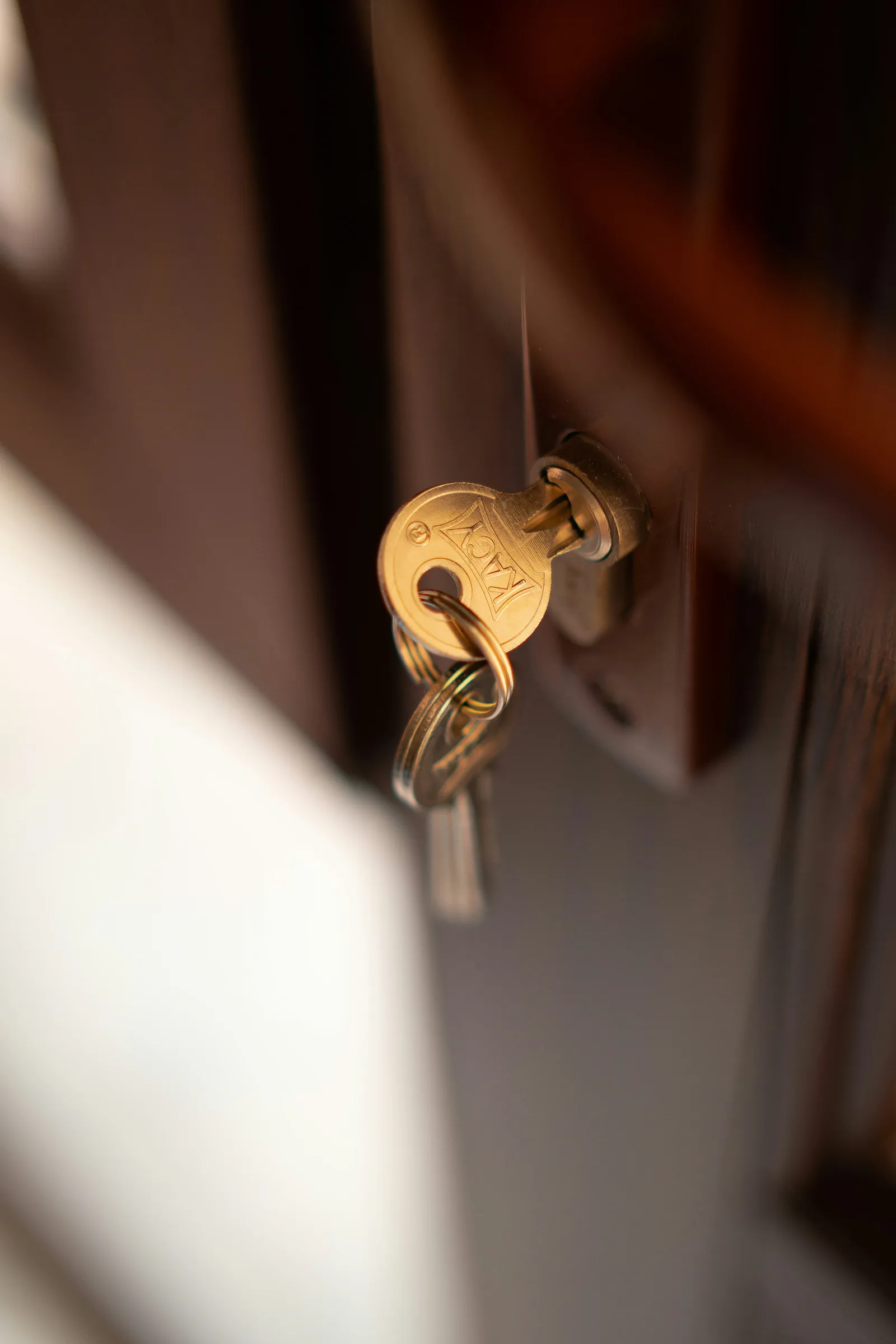
If your house key looks like a standard hardware-store key, in most cases yes, anyone holding it for a few minutes can walk into a kiosk and walk out with a working copy.
The Uncomfortable Truth About "Do Not Duplicate"
Keys stamped "Do Not Duplicate" feel official, but that stamp isn't legally enforceable in most states and isn't something hardware-store cutting machines check for. Most kiosks will cut the copy anyway.
Who Might Have Copied Your Key Already
- Past contractors or repair technicians
- A house sitter or dog walker from a few years back
- A former tenant or roommate
- A real estate agent from when the home was listed
If you can't confidently name everyone who's ever held your key, that's worth addressing.
The Real Solution: Restricted Keyways
Patented key systems, like Medeco, Mul-T-Lock, and Abloy, use a keyway geometry that's legally protected and physically difficult to duplicate on standard equipment. Copies can only be cut by authorized locksmiths, and typically require ID or a signed authorization card tied to your account. See our high-security locks explainer for more.
Rekeying vs. Restricting: Different Problems
Rekeying invalidates every copy that already exists, it solves the past. A restricted keyway prevents new unauthorized copies going forward, it solves the future. Many homeowners benefit from doing both together.
Signs You Should Rekey Now
- You recently moved in
- You've lost track of how many copies exist
- You ended a relationship or tenancy with someone who had a key
See our guide on how often to change your home locks for the full picture.
Want to switch to a restricted keyway, or just rekey what you have? Call 818-249-5128.