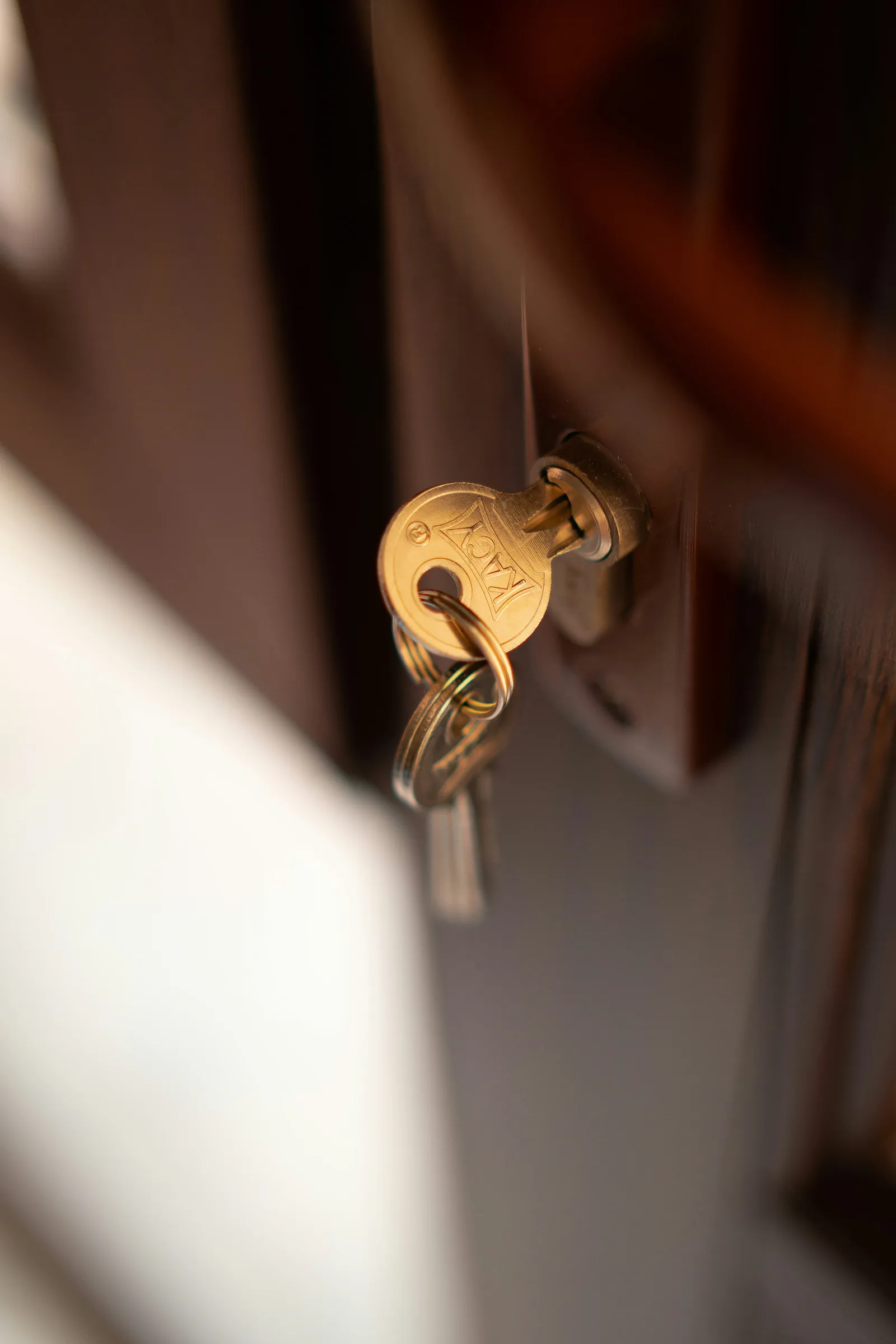
"Can you change my locks?" means different things to different people, and the confusion causes real quote mismatches. Here's the plain-terms difference.
"Changing Locks" Usually Means One of Two Things
When someone says this, they could mean rekeying the existing hardware, or physically replacing the lock. Both accomplish "my old keys won't work anymore," but they're different jobs at different price points.
Rekeying, What Actually Happens
The existing lock stays exactly where it is. A locksmith removes the cylinder, swaps the internal pins to a new pattern, and cuts you fresh keys. The hardware, finish, and appearance don't change at all, only the internal pin configuration.
Replacing the Lock, What Actually Happens
The entire lock body is removed and swapped for new hardware, new finish, new mechanism, new keys, all of it. This is the right call when the hardware itself is worn, damaged, or you want to upgrade to a different grade or style.
Same Outcome, Different Job
Security-wise, if your existing hardware is in good condition, rekeying accomplishes the exact same goal as replacement, at a fraction of the cost. The lock is just as secure either way.
When People Actually Need Full Replacement
- The hardware is worn, sticky, or damaged
- You want a higher security grade or a smart lock
- You don't like how the existing hardware looks
Talking to Your Locksmith
Being specific upfront (rekey vs. replace) avoids a mismatched quote. If you recently moved into a new home, see our full rekey vs. replace guide for new homeowners. If you're just wondering how often either is needed, see how often you should change your home locks.
Not sure which you need? Call 818-249-5128 and we'll tell you honestly, based on the hardware you already have.