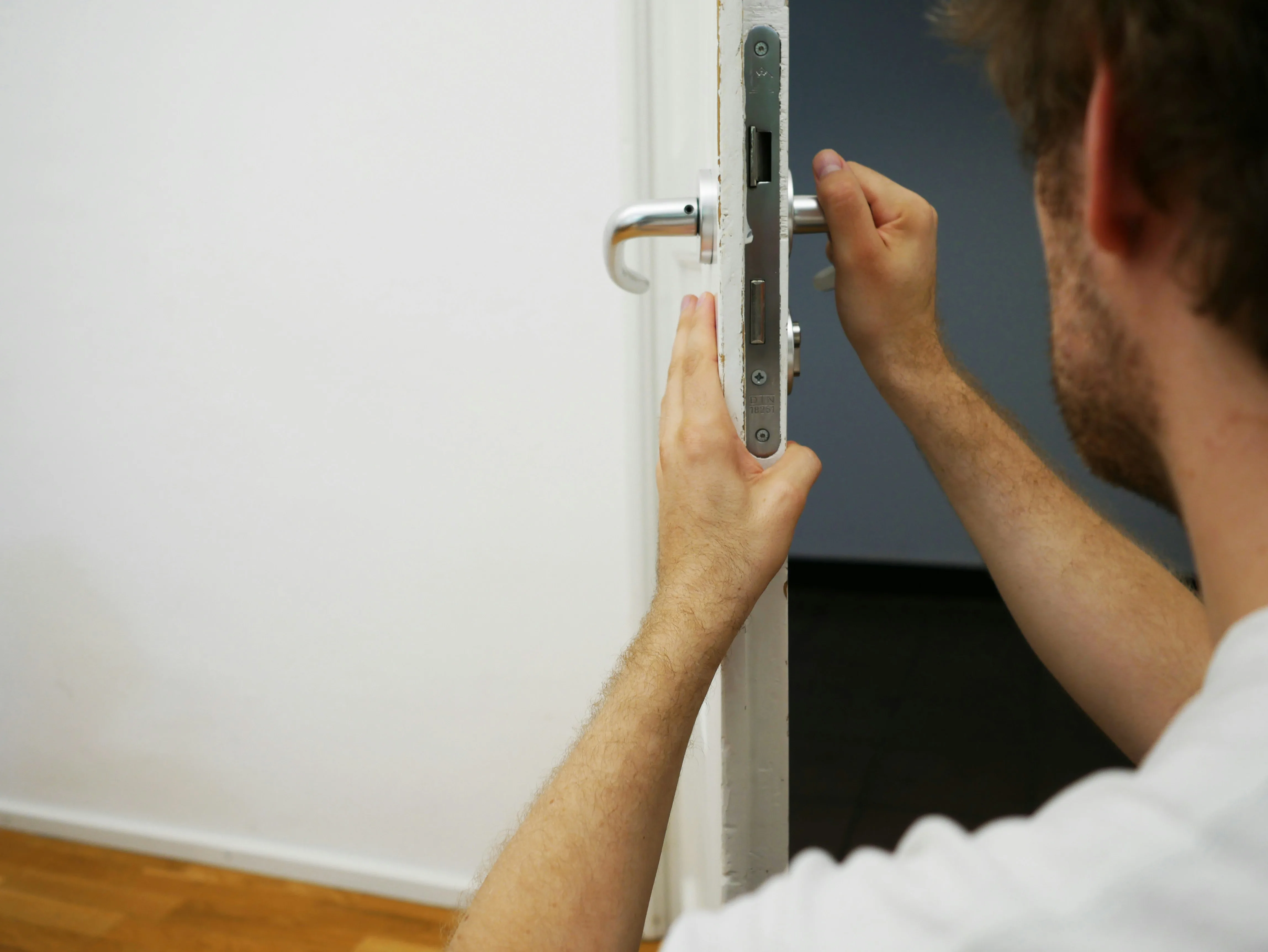
Not every lock on your home does the same job. Here's a plain-English rundown of what you're actually looking at.
Deadbolts
The primary security hardware on any exterior door. Single-cylinder versions have a thumbturn inside and keyhole outside, double-cylinder versions require a key on both sides (with fire-egress restrictions in many cases). See our best deadbolts for California homes guide.
Knob Locks
The rounded handle with a small spring latch. Convenient, but not meant to be your only line of security on an exterior door, they're relatively easy to force. Always pair with a deadbolt.
Lever Handle Locks
Common in newer construction and required in some ADA-compliant buildings for easier operation. Easier to open with reduced grip strength, but also somewhat easier to force, again, pair with a deadbolt for real security.
Mortise Locks
Found in older or higher-end homes. The lock body is recessed directly into a pocket cut in the door edge, combining the latch and deadbolt functions into a single, more robust unit.
Smart Locks
Keypad, app, or biometric entry replacing or supplementing a traditional key. See our guides on whether smart locks are really safe and our full smart lock vs. deadbolt comparison.
Padlocks and Auxiliary Locks
Used for sheds, gates, and secondary storage, not typically a primary residential entry solution but an important layer for outbuildings.
Which One Do You Actually Need?
Front and back doors: a Grade 1 deadbolt plus a knob or lever handle. Interior doors: a simple knob or lever is fine. Sheds and gates: a quality padlock. See our guide on whether every exterior door needs a deadbolt for more.
Not sure what's currently on your doors, or what should be? Call 818-249-5128 and we'll take a look.